22 Cool Seashell Drawing Ideas (Easy, exotic, beautiful)
This post is all about seashell drawing ideas.
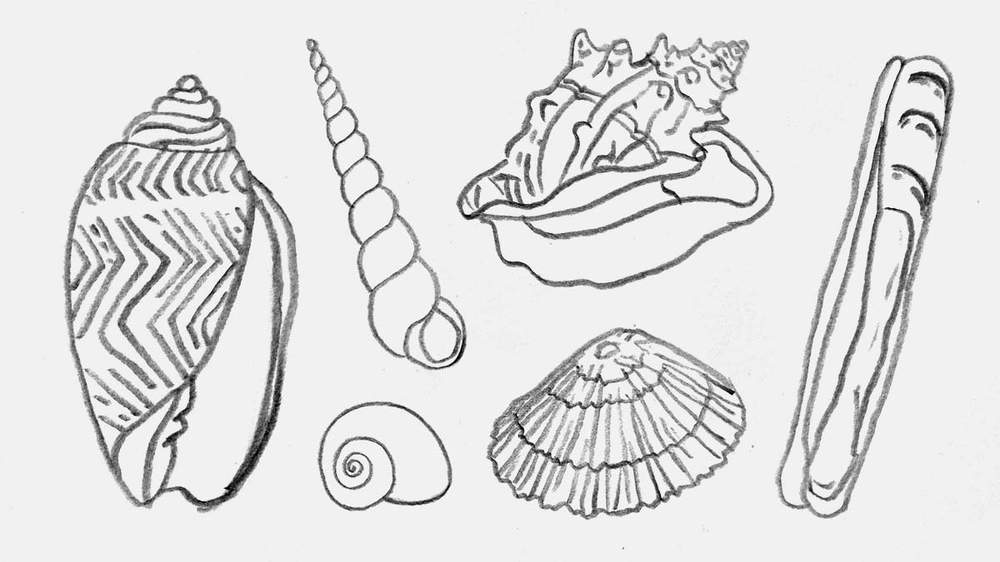
Looking for beautiful seashell drawing inspiration? In this post, you'll find seashell drawing ideas that are guaranteed to inspire you.
When I was making my summer drawing ideas post, I drew two simple shells. I really liked sketching those shells, and they inspired me to create this post with all kinds of seashells, from super easy moon snail shells to the super impressive Venus comb murex shell.
Drawing all these seashells was the most fun I had drawing something in a long time. And I'm sure these seashell drawings will inspire you to draw your own.
I just wanted to let you know that this post contains affiliate links and any purchases made through these links will result in a small commission to me and don't cost you anything extra.
To make these seashell drawings, you only need a regular graphite pencil, as I used. If you want to make your drawings look super clean and more finished, you can trace them with a black fineliner and then erase the sketch lines. And if you want to make yours look super impressive, you can use some alcohol markers to color them in.
But if you're just looking for some easy seashell drawing ideas, just a regular pencil is more than enough to get started.
In This Post
Common Seashells
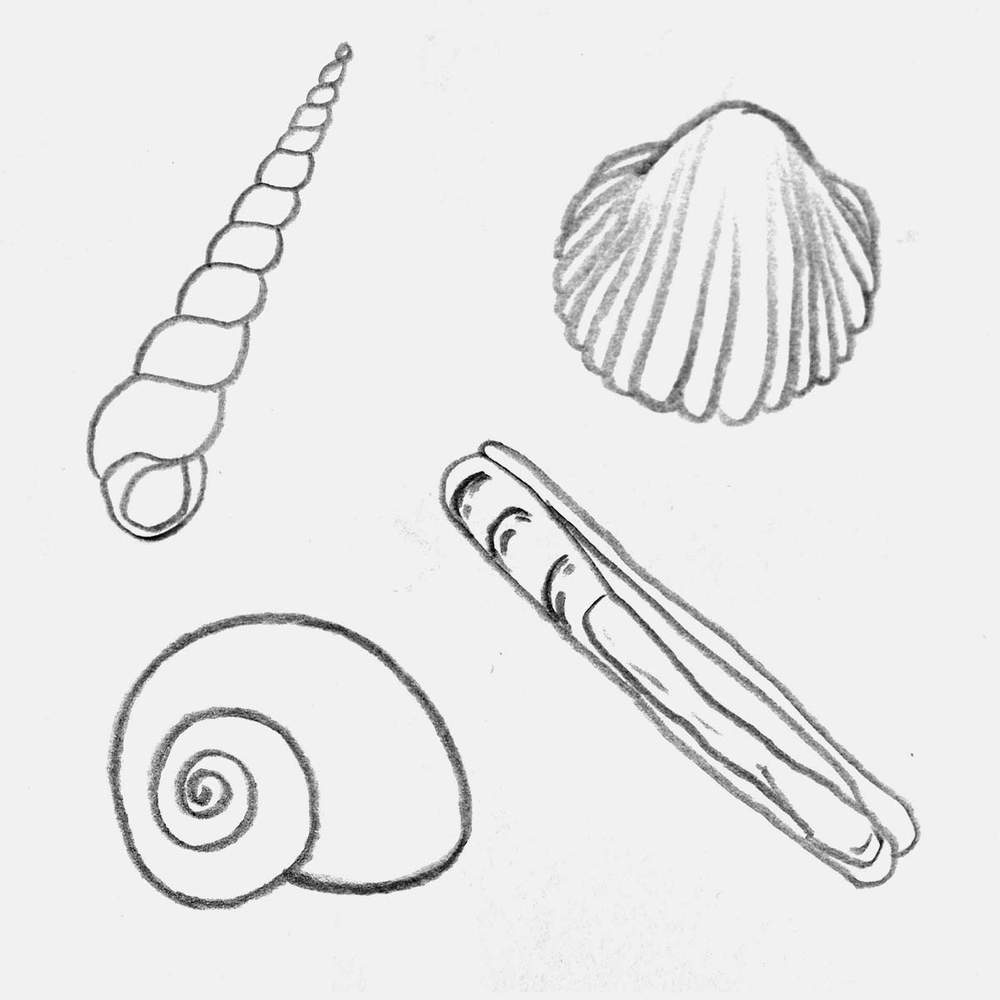
1. Cockle Shell
- Size: up to 2.5 inches
- Commonness: very common
- Found in: sandy beaches
- Difficulty: very Easy
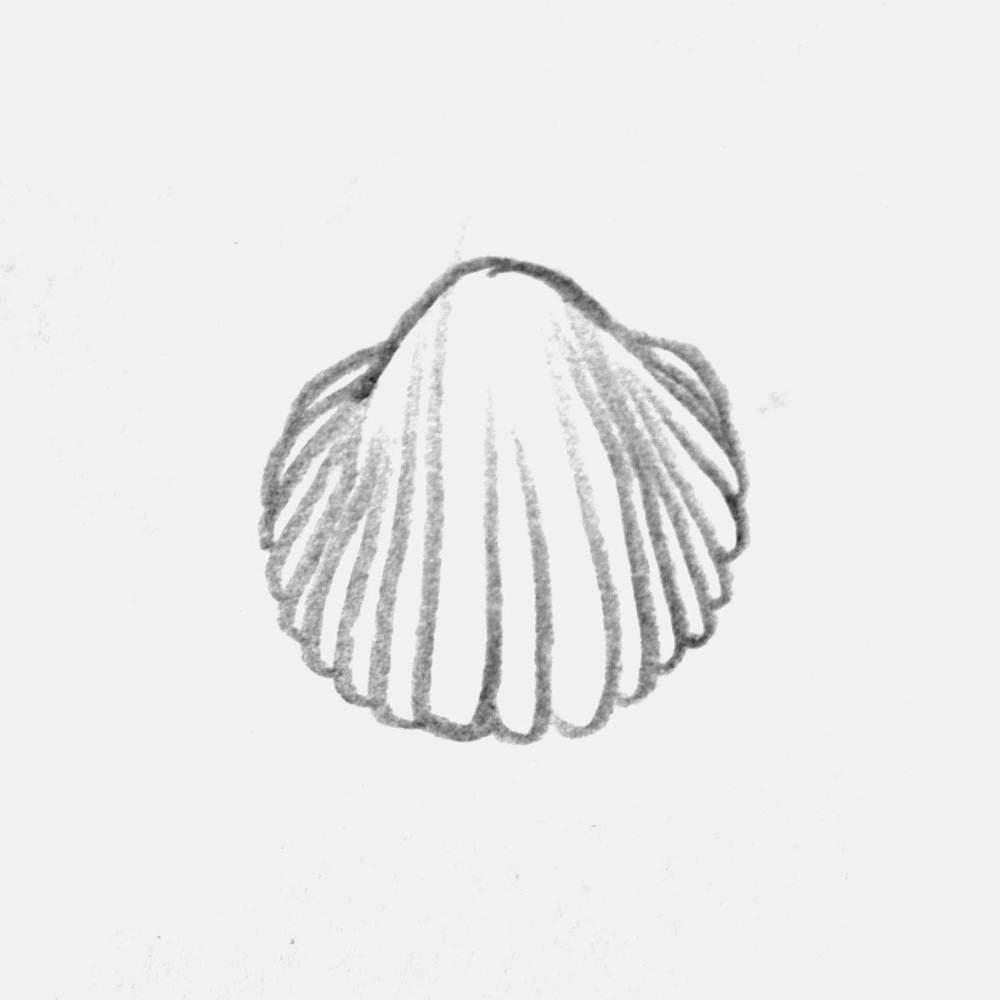
When thinking of a seashell, you probably think of something that looks like a cockle, just like I did. Cockles are one of the most common shells to find on a beach. Here in the Netherlands, the beaches are covered with them.
A cockle shell is a great place to start when you want to draw seashells. They are one of the simplest shapes to draw from this list.
Did you know that when you view two joined cockle shells from the side, they look like a heart? That's why they've been a simple of love for a long time.
2. Scallop Shell
- Size: up to 6 inches
- Commonness: very common
- Found in: beaches worldwide
- Difficulty: very easy
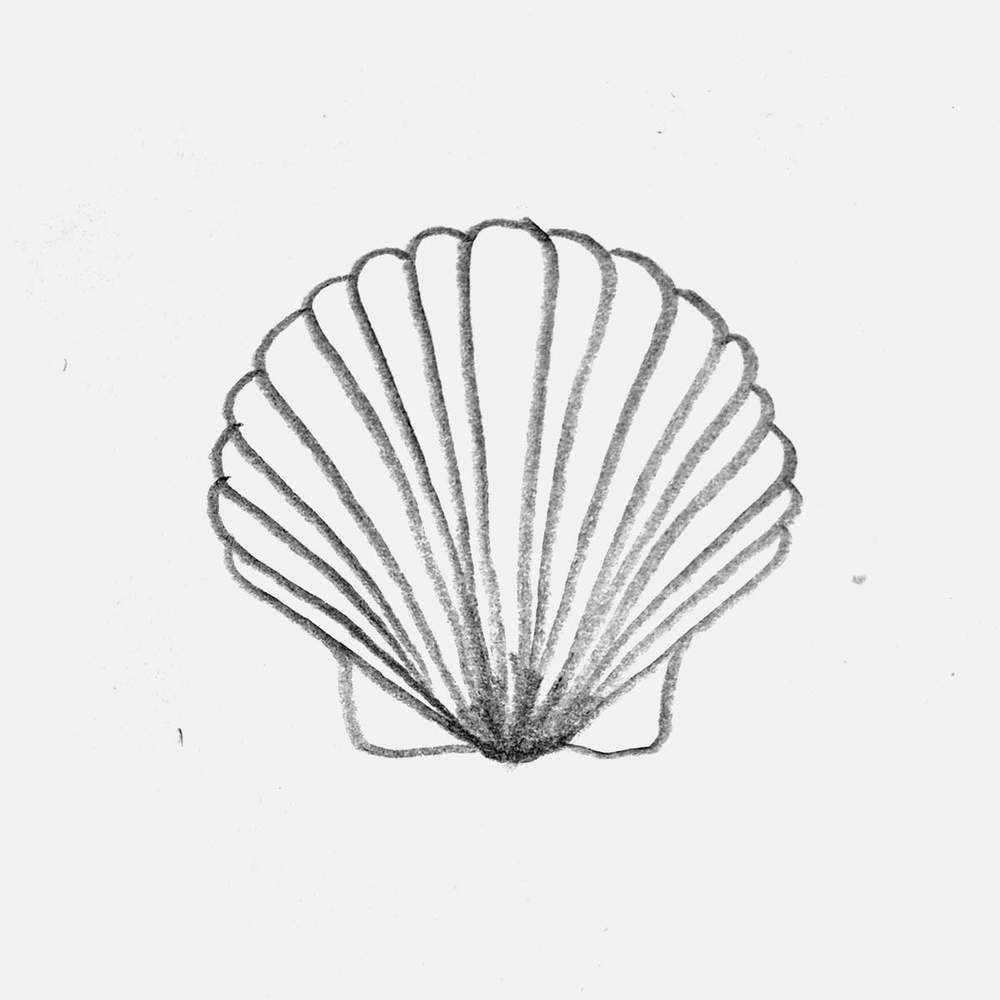
Scallops are another common and iconic shell, though you do need to look for them more when you're on the beach. Scallops can actually swim by clapping their shells together. How crazy is that?!
These shells are also super easy to draw, almost easier than a cockle.
3. Oyster Shell
- Size: up to 12 inches
- Commonness: common
- Found in: estuaries & coasts
- Difficulty: easy
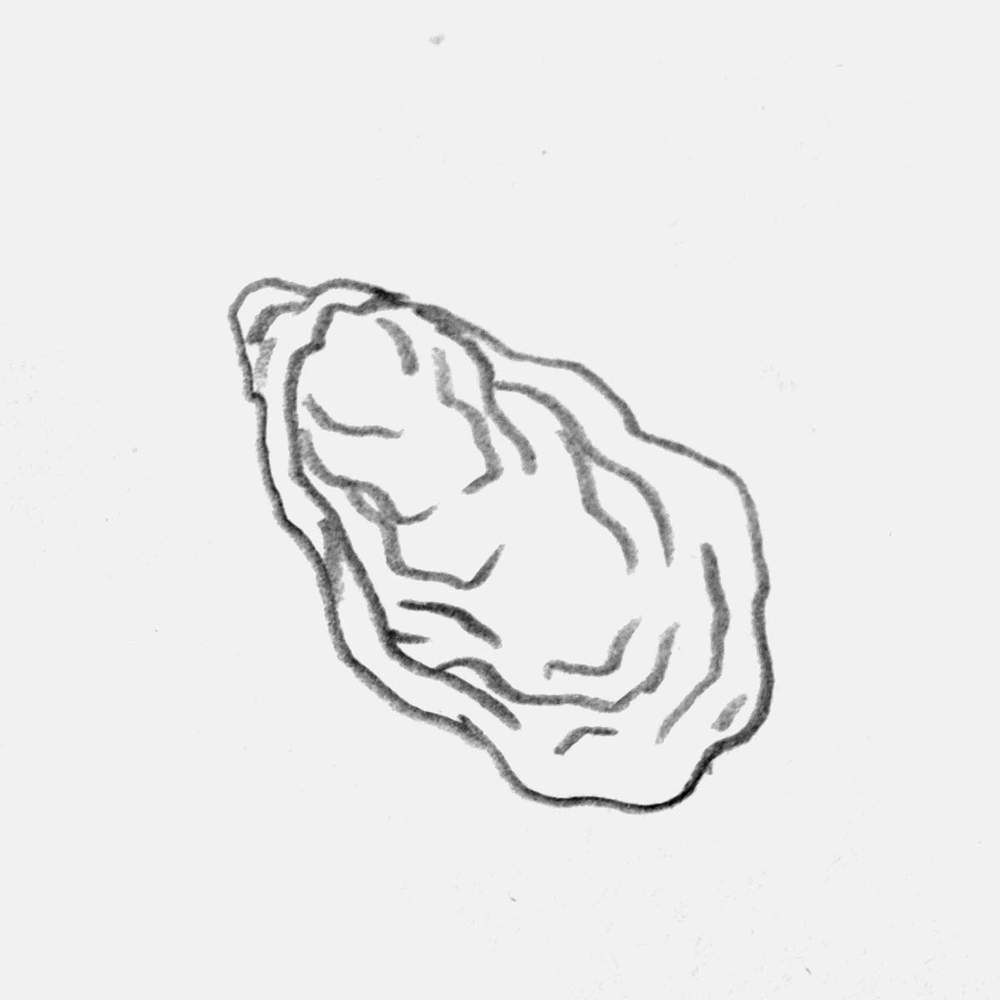
Oysters are well known as a delicacy, but honestly, I don't know how anybody could eat these. They are also known for creating pearls. They don't just create pearls for the sake of it. They do it when a parasite or just a grain of sand gets trapped in the shell. When that happens, they add layer after layer of nacre over it until it becomes a full pearl.
Unlike the previous two shells, oysters are made up of many wiggly lines, creating this rough and uneven texture, making them slightly more challenging to draw.
And if you want an extra challenge, you could add one of those pearls inside it.
4. Whelk Shell
- Size: up to 8 inches
- Commonness: common
- Found in: Atlantic coastlines
- Difficulty: medium
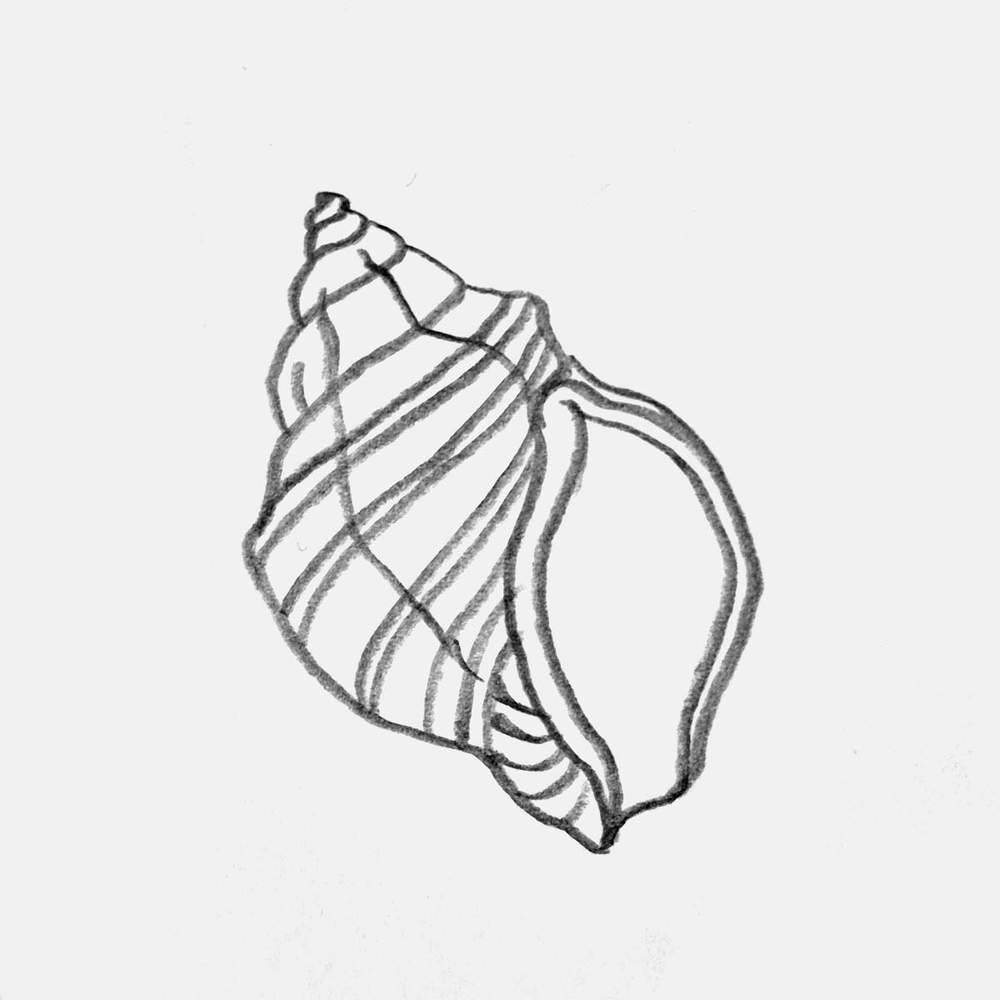
Whelk shells are also pretty common if you live along the Atlantic coastline, unlike me, and they are the shells of quite big sea snails. And when the snail dies and leaves behind its shell, hermit crabs will take it and make it their new home.
Drawing whelk shells is a bit more difficult than drawing a cockle because of the spiral shape and ridges.
5. Moon Snail Shell
- Size: up to 4 inches
- Commonness: common
- Found in: sandy seabeds all around the world
- Difficulty: very easy
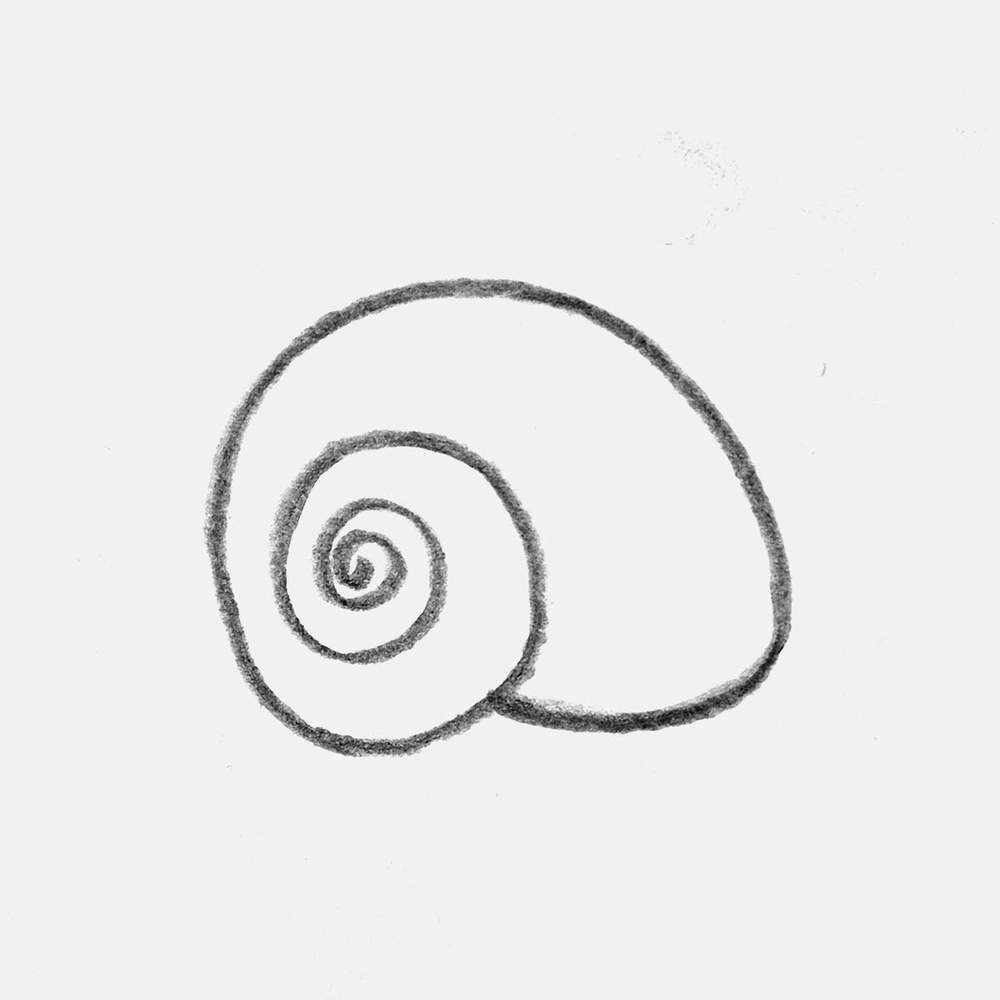
Moon snails, on the other hand, are super easy to draw. These shells are shaped like a simple, smooth spiral, like any snail. These are great for doodling or creating a shell pattern.
If you're a beginner, this shell is a great place to start. When drawing a moon snail shell, I find it easiest to start at the center and spiral outwards.
6. Razor Clam Shell
- Size: up to 8 inches
- Commonness: common
- Found in: sandy beaches
- Difficulty: easy
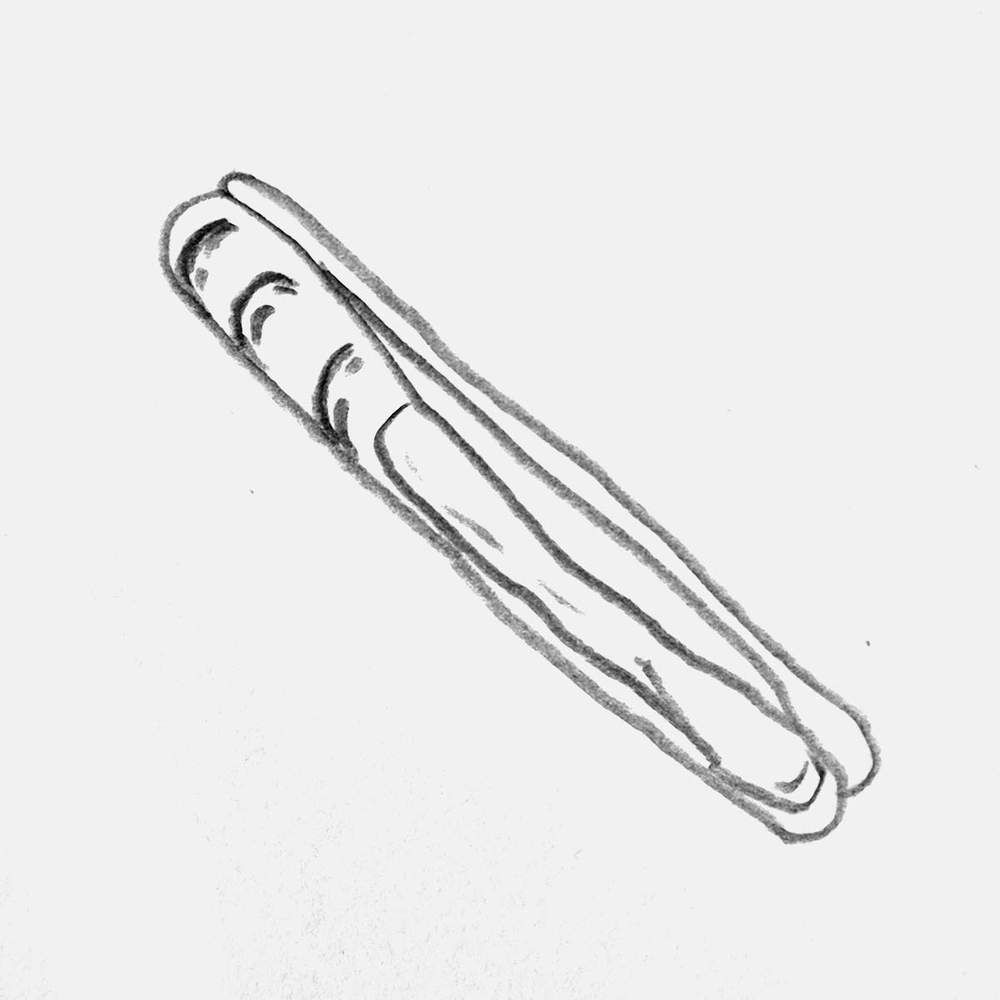
Razor clams have a pretty unusual shell shape. They are not shaped like a spiral or like a regular cockle shell. Razor clam shells are rectangular, and they can burrow themselves surprisingly fast.
I didn't expect to like drawing this one so much, but their unique shape and trying to replicate the texture made it super fun, and it turned out really well.
7. Olive Shell
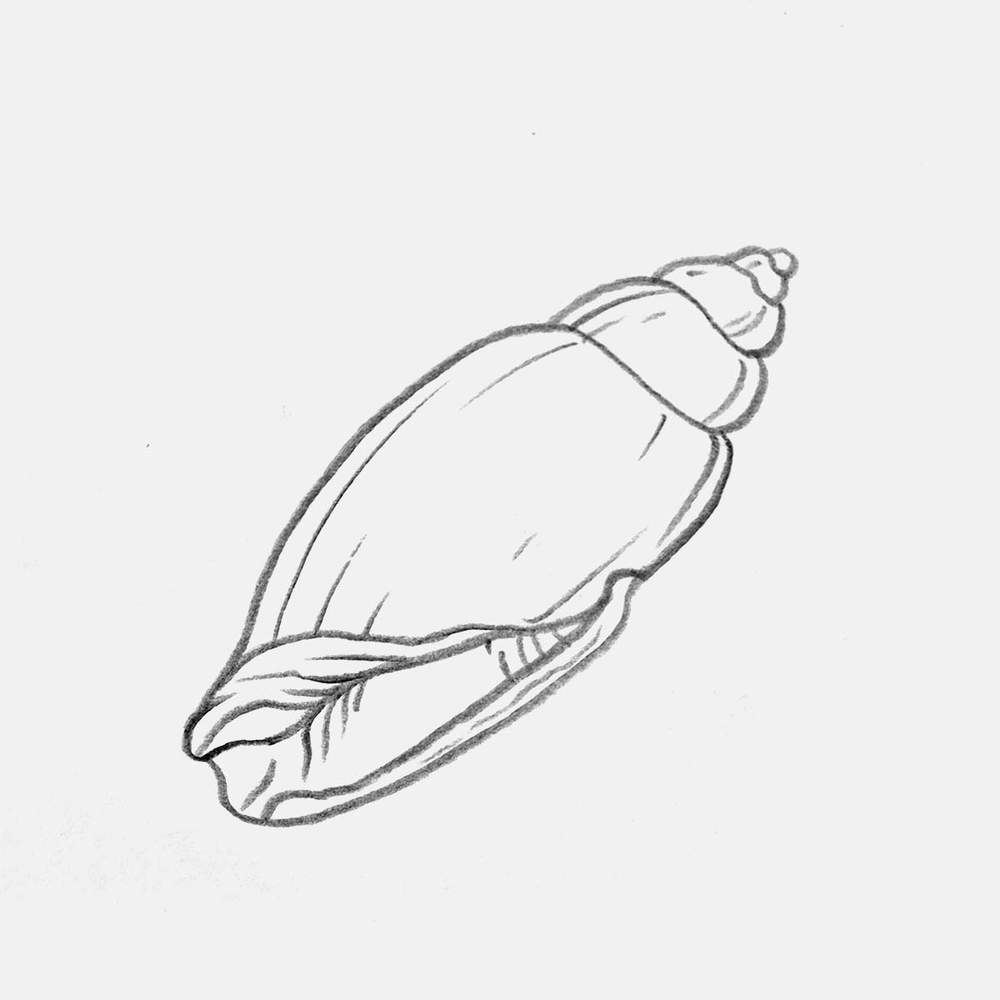
- Size: up to 4 inches
- Commonness: uncommon
- Found in: tropical beaches
- Difficulty: medium
Olive shells are known for their glossy finish and their elongated shape. Many olive shells have an intricate pattern that looks like an abstract painting, like the lettered olive shell, which I've added later on in this seashell drawing list.
To replicate the reflectiveness of the glossy surface of the shell, I added some thin lines following the shape of the shell.
8. Periwinkle Shell
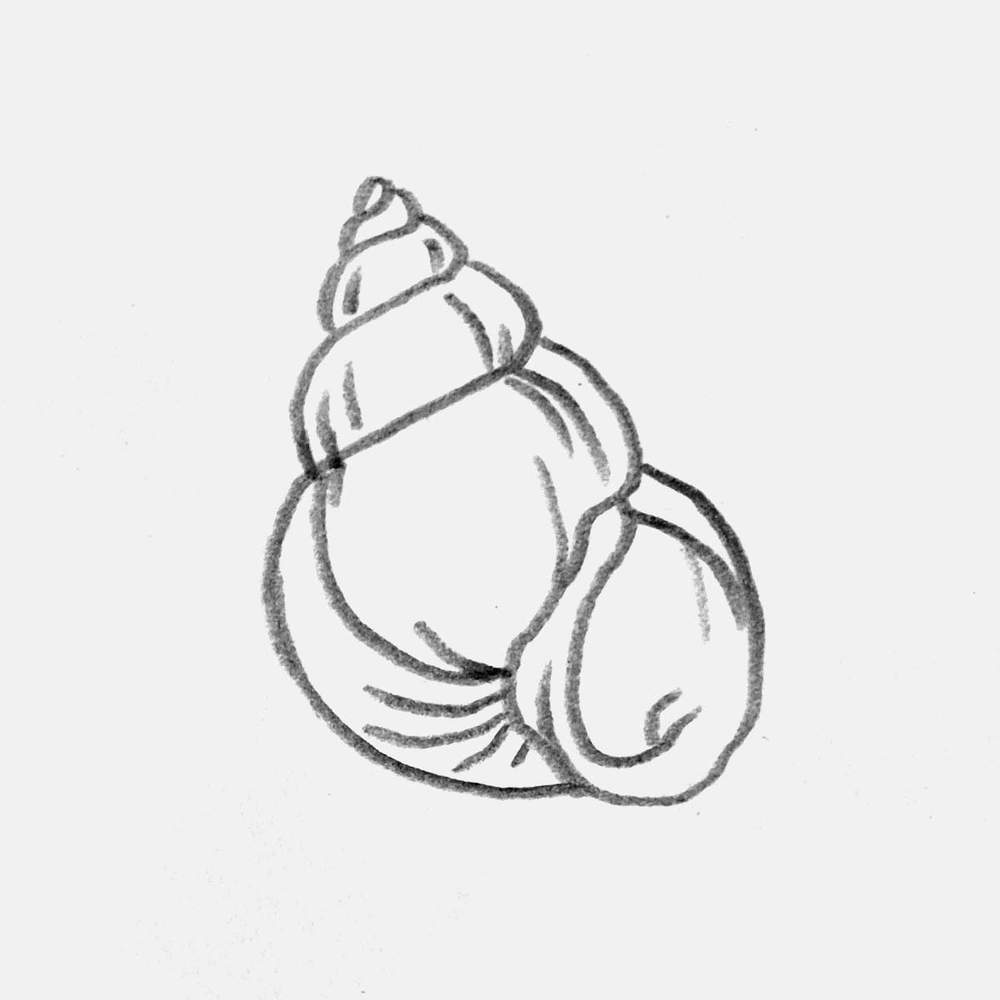
- Size: up to 1.5 inches
- Commonness: very common
- Found in: rocky shores
- Difficulty: easy
Periwinkles are another species of sea snails with a classic spiral-shaped shell. These are pretty small, and they can survive outside the water for a long time by sealing themselves in their shells.
9. Limpet Shell
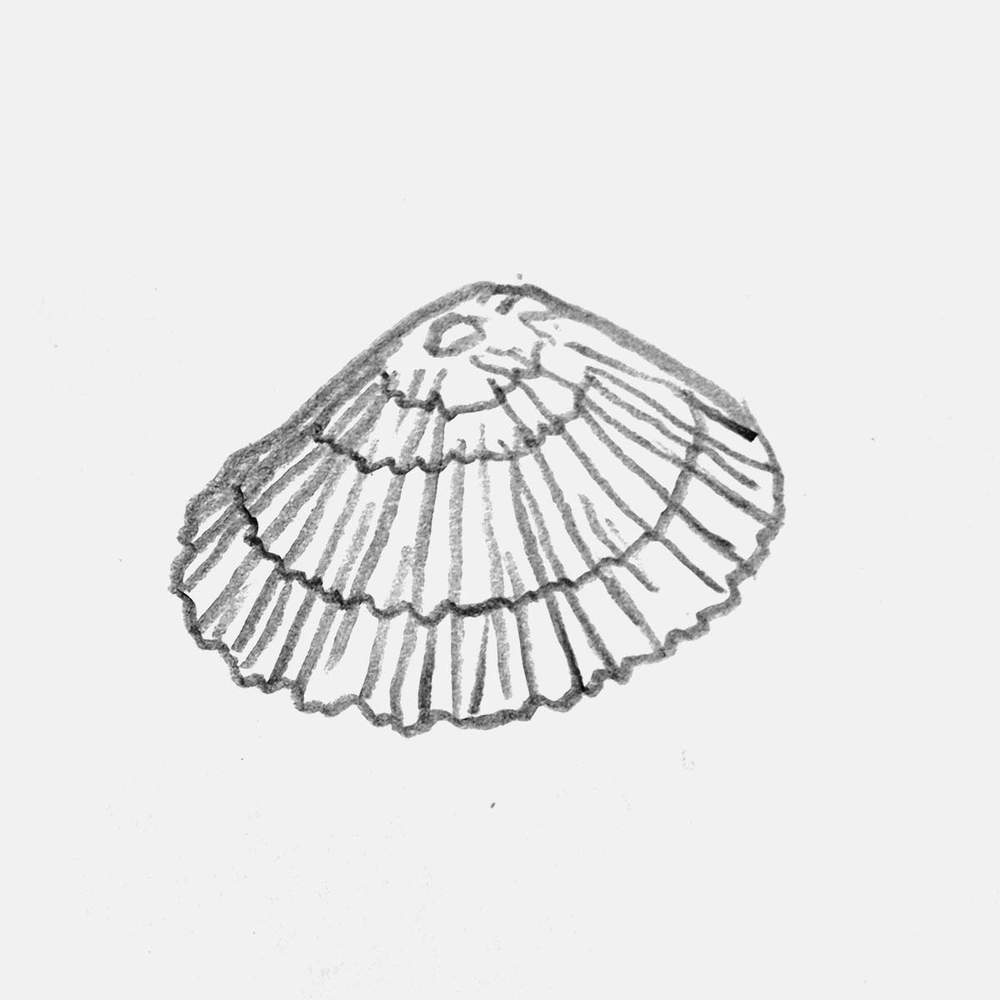
- Size: up to 3 inches
- Commonness: common
- Found in: rocky coasts
- Difficulty: easy
Limpets have lots of ridges running across the shell and have a serrated edge along the outside edge. Trying to replicate these harsh lines made drawing this shell pretty fun.
Fun fact: just like you and me, these shells return to the same place every day after "work". They have their own homes on a rock.
10. Auger Shell
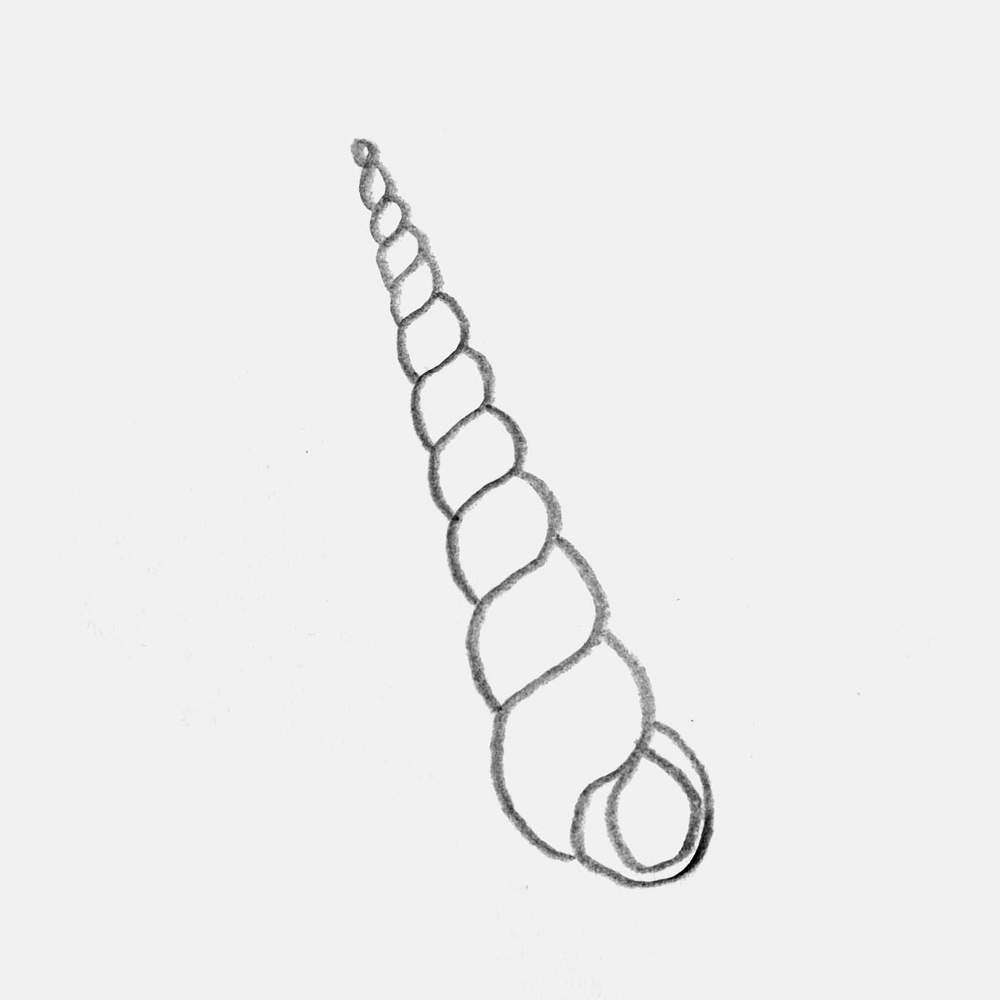
- Size: up to 8 inches
- Commonness: uncommon
- Found in: tropical oceans
- Difficulty: very easy
Auger shells are one of the best-known sea snail shells. Auger shells are very slender and long, making them more pointy than a lightsaber.
Auger shells have this perfectly spiral shape, which I really enjoyed drawing. I started from the very tip and connected a bunch of mirrored and growing S-shapes to form the spiral shell. This process is super satisfying.
11. Tulip Shell
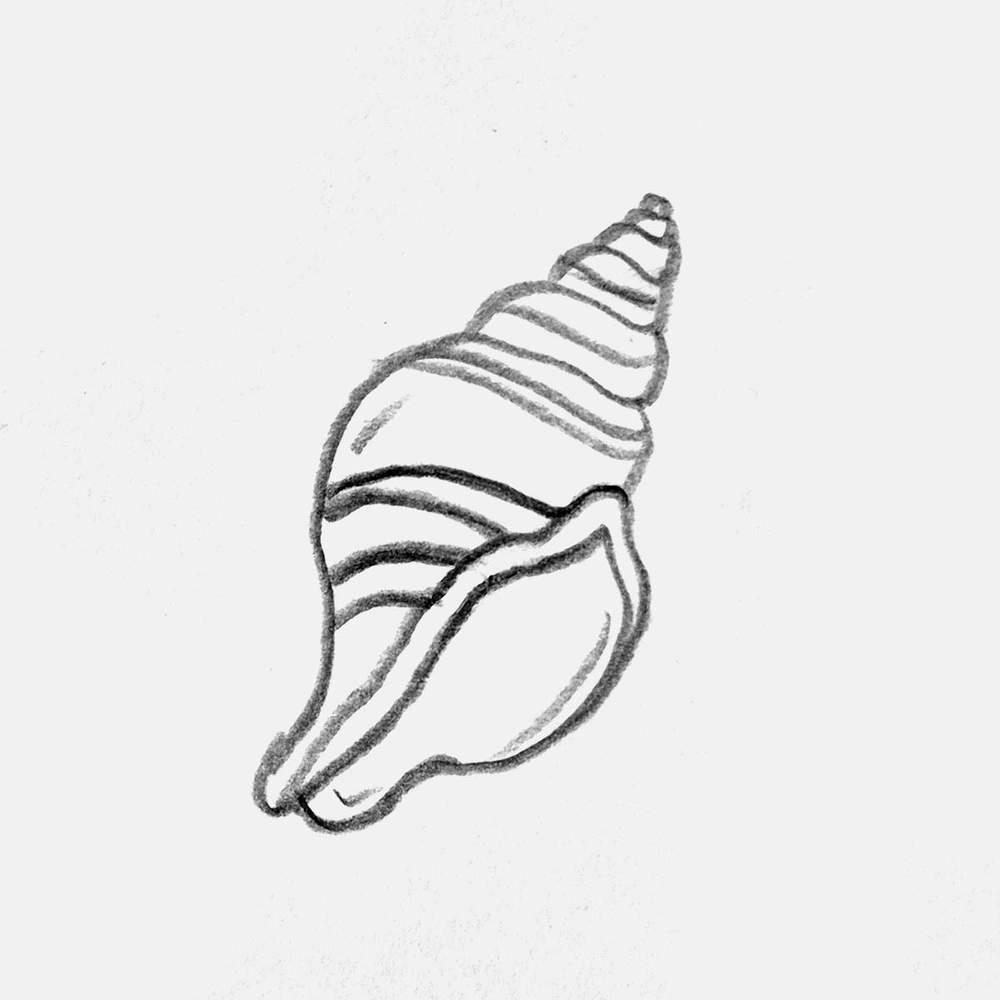
- Size: up to 6 inches
- Commonness: uncommon
- Found in: Caribbean & Florida
- Difficulty: medium
Tulip shells get their name for their resemblance to the shape of a tulip flower, but honestly, I don't see the resemblance. However, these shells do look beautiful with the swirling patterns and their spiral shape, and they're a perfect drawing exercise.
12. Dove Shell
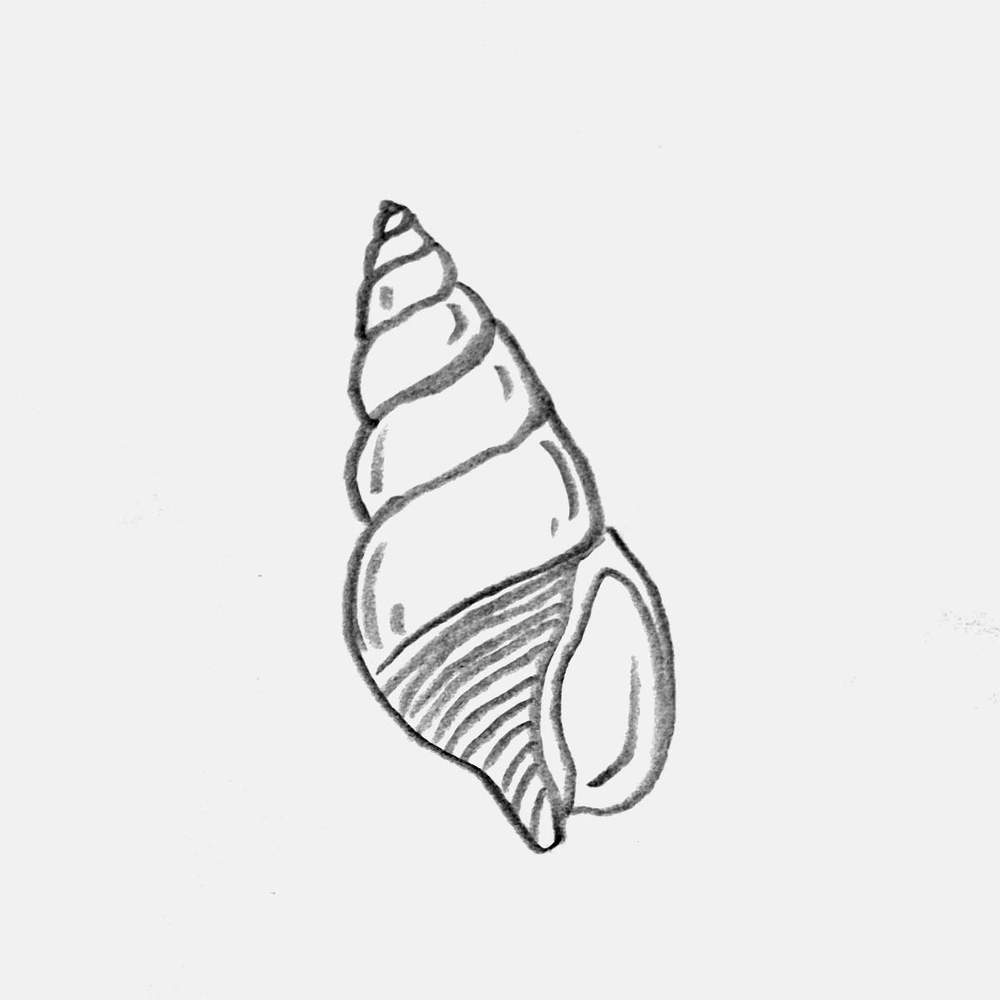
- Size: up to 2 inches
- Commonness: uncommon
- Found in: tropical reefs
- Difficulty: medium
Dove shells are super small in comparison to the other sea snail shells we covered so far. There are hundreds of different species, and they often have a beautiful pattern on their shell.
For my dove shell drawing, I added these lines along the bottom of the shell, which I think looks really nice.
Iconic Seashells
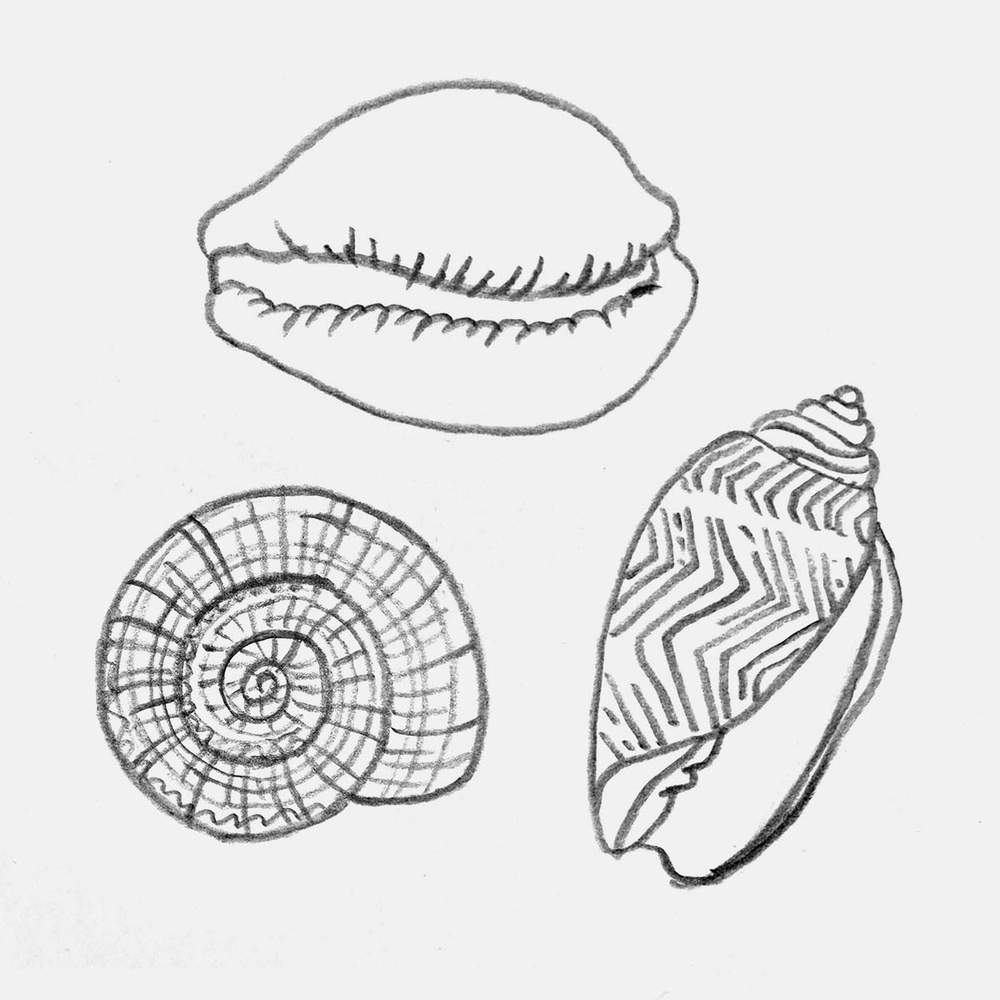
13. Cowrie Shell
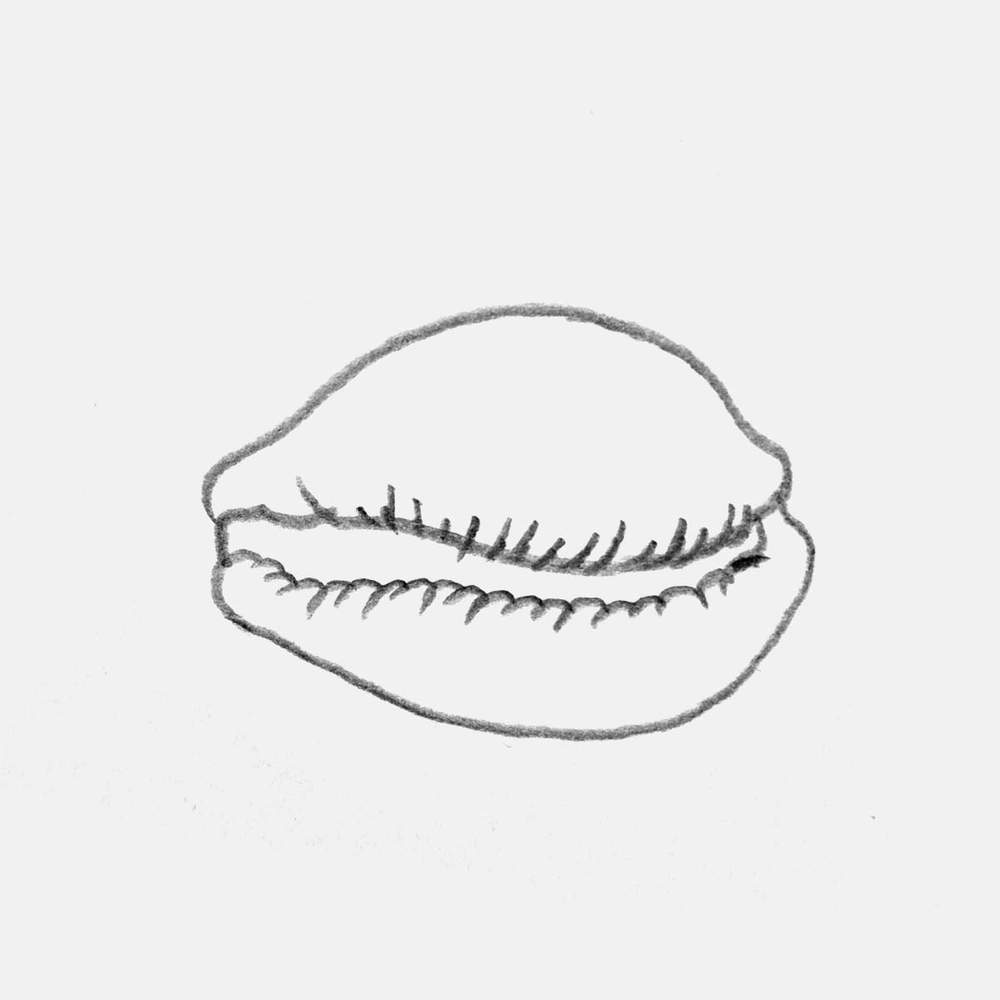
- Size: up to 7.5 inches
- Commonness: common in tropical places
- Found in: Indo-Pacific & Caribbean
- Difficulty: medium
Cowrie shells are one of the most recognizable shells due to their super smooth and shiny surface and the narrow opening at the bottom. These shells were once used as currency in parts of Africa, Asia, and the Pacific. For a long time, we had one hanging in our bathroom.
Their smooth shape and the ridges along the edges of the opening make them super satisfying to draw. I drew mine blank, but there are plenty of cowrie species with beautiful patterns like the tiger cowrie or the eyed cowrie.
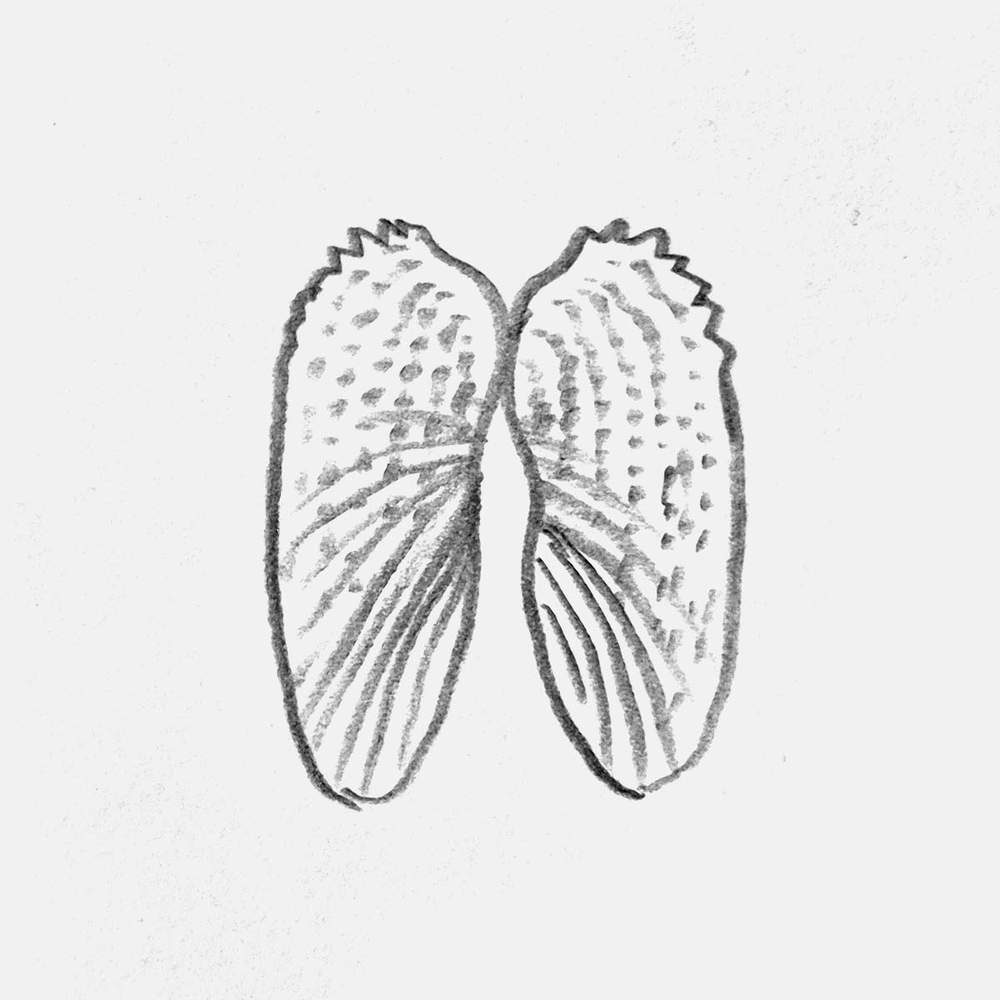
14. Angel Wing Shell
- Size: up to 10 inches
- Commonness: uncommon
- Found in: sandy coasts
- Difficulty: medium
Angel wings get their name from, well, looking like angel wings when they're still connected. These shells have a beautiful pattern with a dotted texture at the top that merges into the ridged pattern at the bottom. These shells also have a serrated edge on the top, while the rest is smooth.
These angel wing shells were super fun to draw because of the change in texture and trying to replicate that.
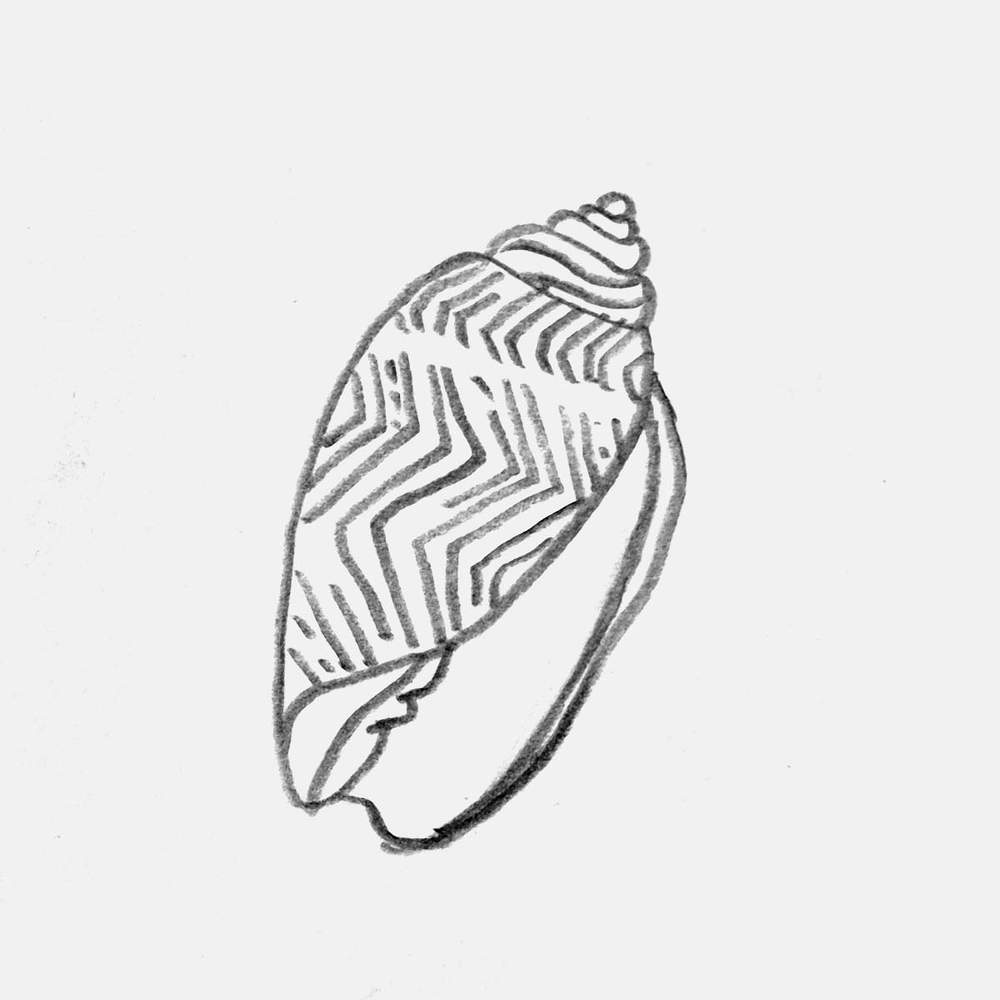
15. Lettered Olive Shell
- Size: up to 10 inches
- Commonness: uncommon
- Found in: Caribbean & Gulf of Mexico
- Difficulty: medium
Earlier, I mentioned that some olive shells have beautiful abstract patterns. The lettered olive shell is one of them. The markings on this shell look just like unreadable ancient lettering, making it super pretty in my opinion. And no two lettered olive shells have the exact same pattern, just like our fingerprints.
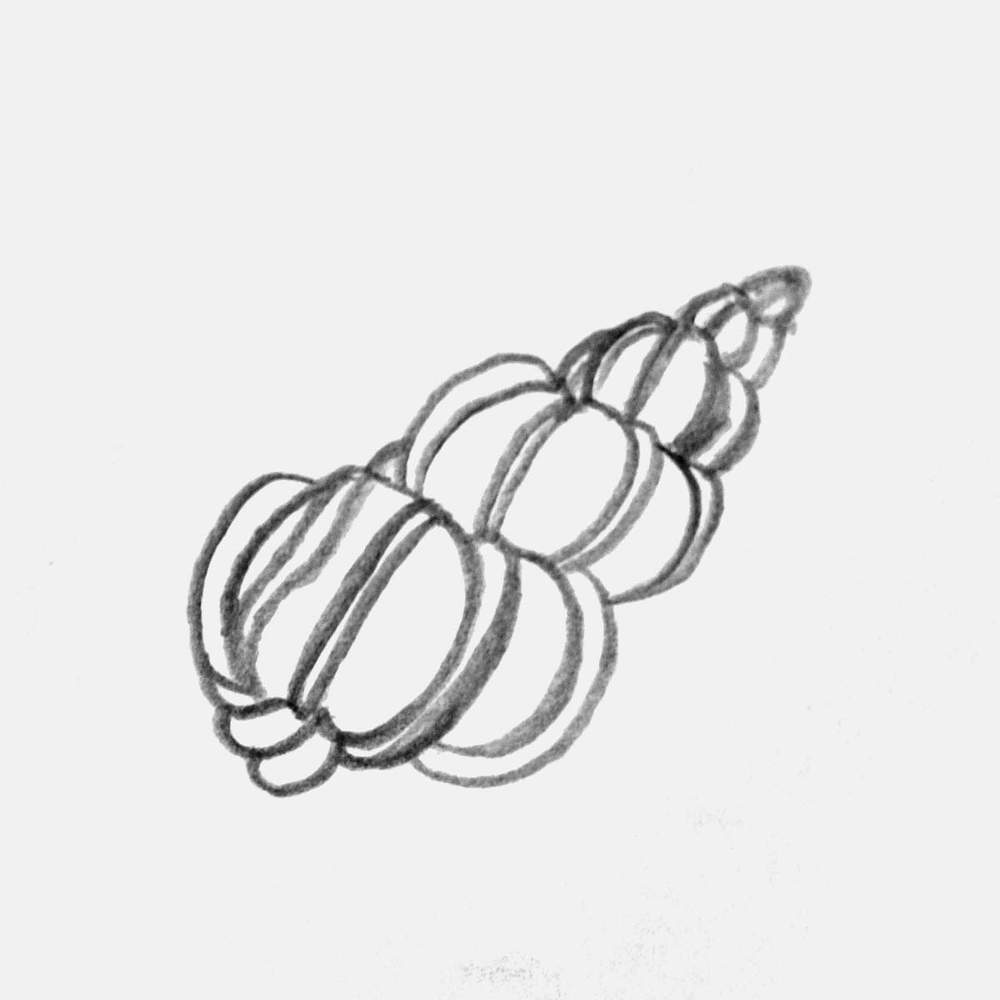
16. Wentletrap Shell
- Size: up to 2.5 inches
- Commonness: rare
- Found in: oceans all around the world
- Difficulty: medium
When I saw the name of this shell, I had to laugh. I love it when Dutch animal names appear in the English language, like the boomslang (literally meaning tree snake), and now this wentletrap shell, which looks a bit like a spiral staircase, doesn't it? That's because in Dutch, wenteltrap means spiral staircase.
The raised ridges that make the stairs of this wentletrap make this shell more difficult to draw. To make it easier, you can start with just a simple spiral shell, and then add the raised ridges.
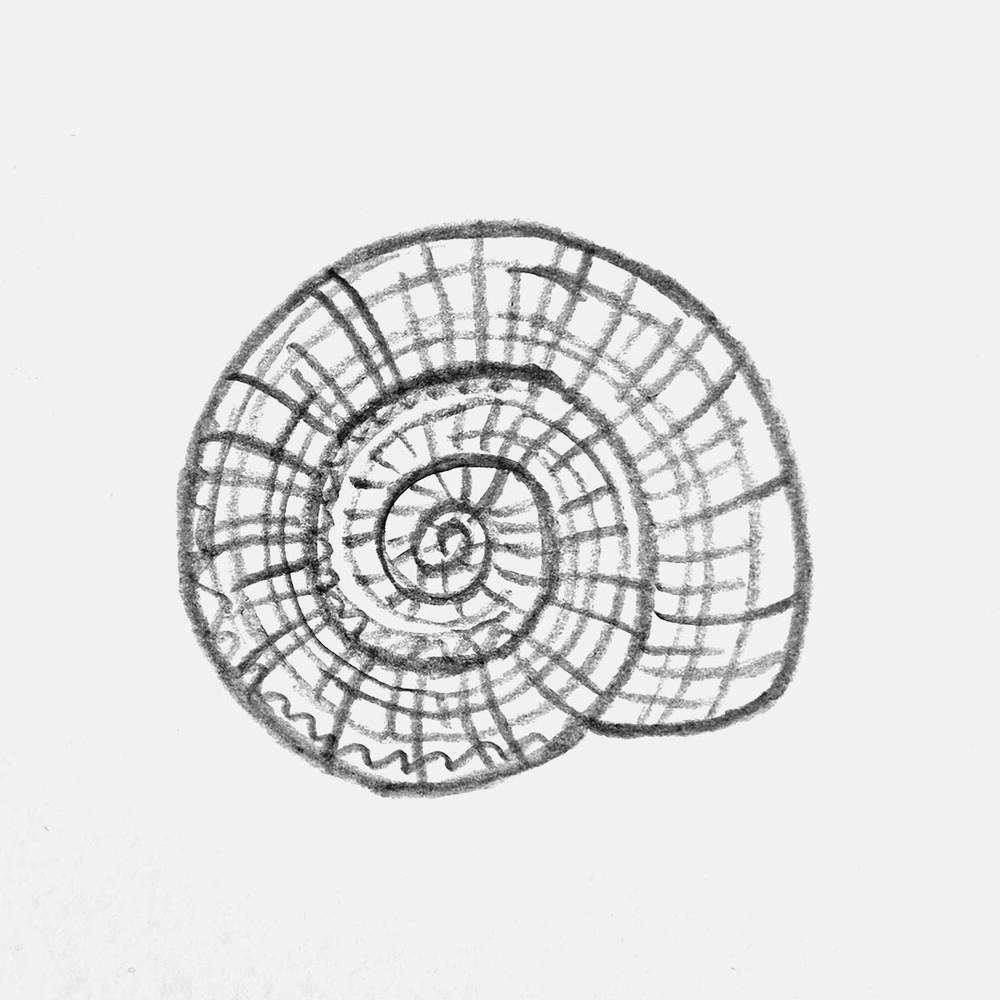
17. Sundial Shell
- Size: up to 3.5 inches
- Commonness: uncommon
- Found in: tropical oceans
- Difficulty: medium
When doing research for these seashell drawing ideas, I came across this sundial shell, and I knew I had to include it. The geometric patterns all over the shell make it super detailed and beautiful. Plus, this spiral shell is actually flat, unlike all the other sea snail shells we've covered in this post.
All the lines and shapes of the shell make this one great for doodling.
Exotic & Cool-Looking Seashells
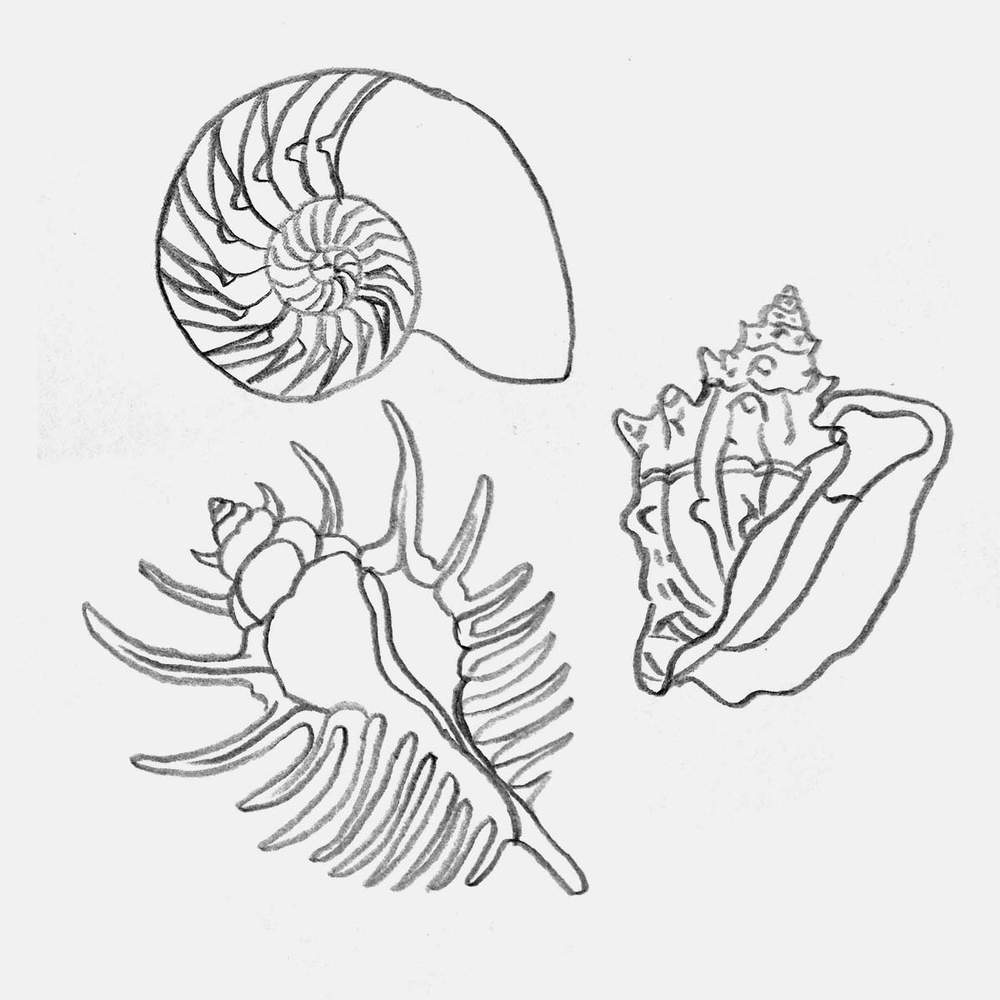
18. Nautilus Shell
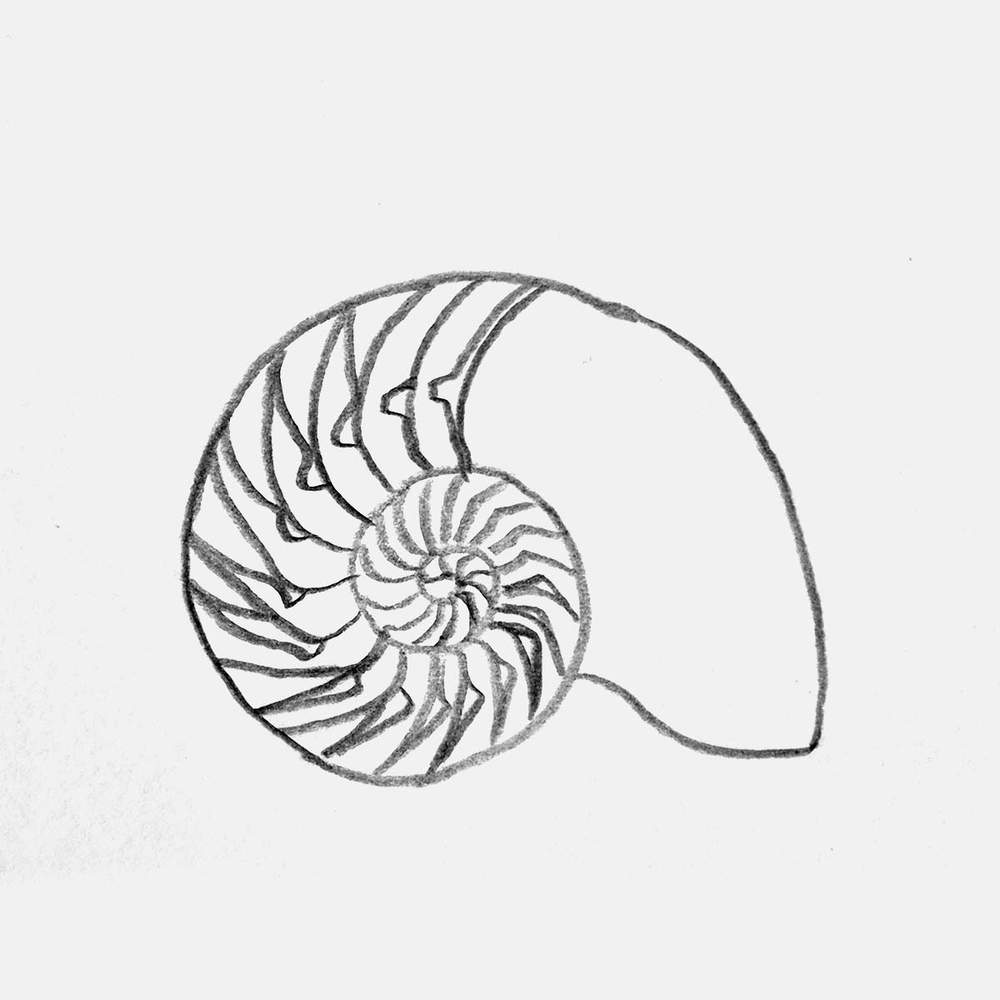
- Size: up to 10 inches
- Commonness: rare
- Found in: Indo-Pacific
- Difficulty: medium
Nautilus shells are one of the most famous natural spirals in the world. These shells have perfectly organized chambers inside, making them fascinating to study (and to draw). That's why I drew this one as a cross-section.
Nautiluses have existed for hundreds of millions of years and are often called living fossils because of it.
19. Conch Shell
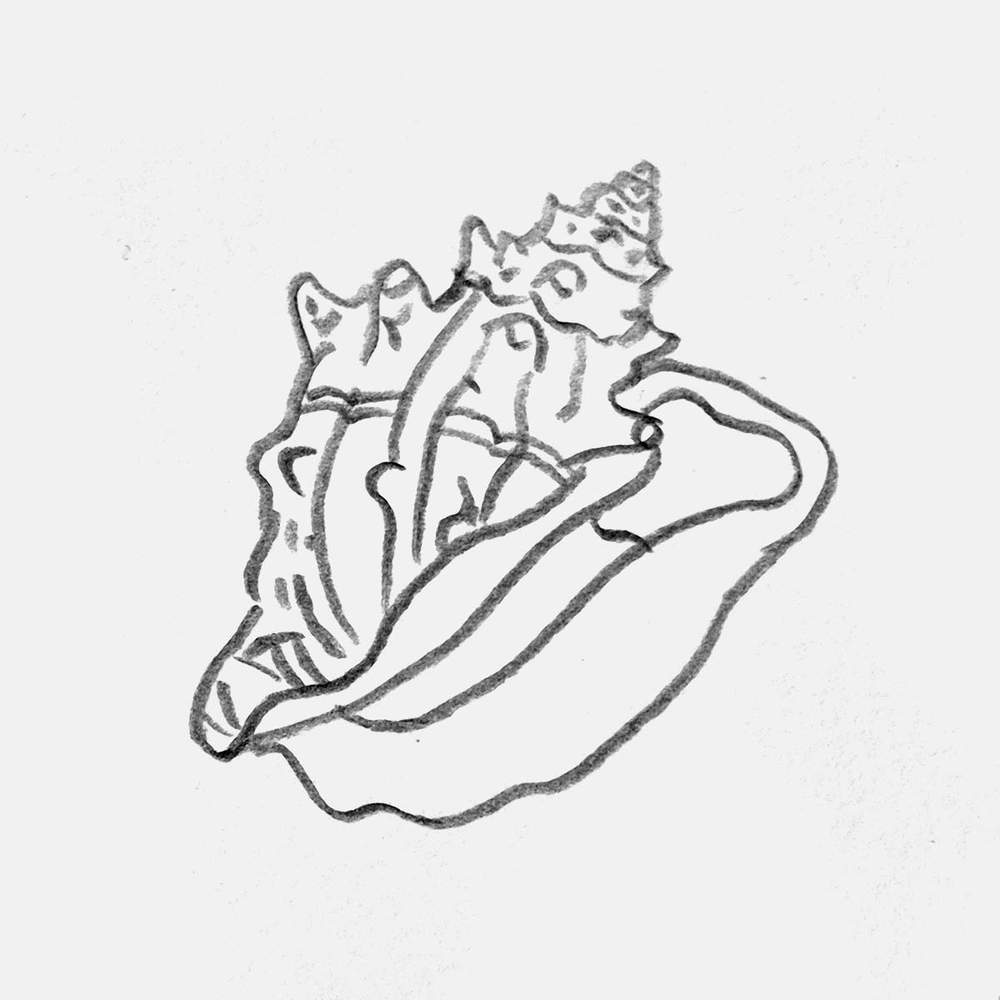
- Size: over 12 inches
- Commonness: common in tropical places
- Found in: Caribbean & tropical waters
- Difficulty: hard
Conch shells can be super big, with a size of over 12 inches, which is bigger than a football. They have a dramatic shape with little spikes all over it and are instantly associated with tropical beaches. In many cultures, conch shells are used as musical instruments or ceremonial horns.
The dramatic shapes with the spikes and large lips make this shell an excellent drawing subject.
20. Spider Conch
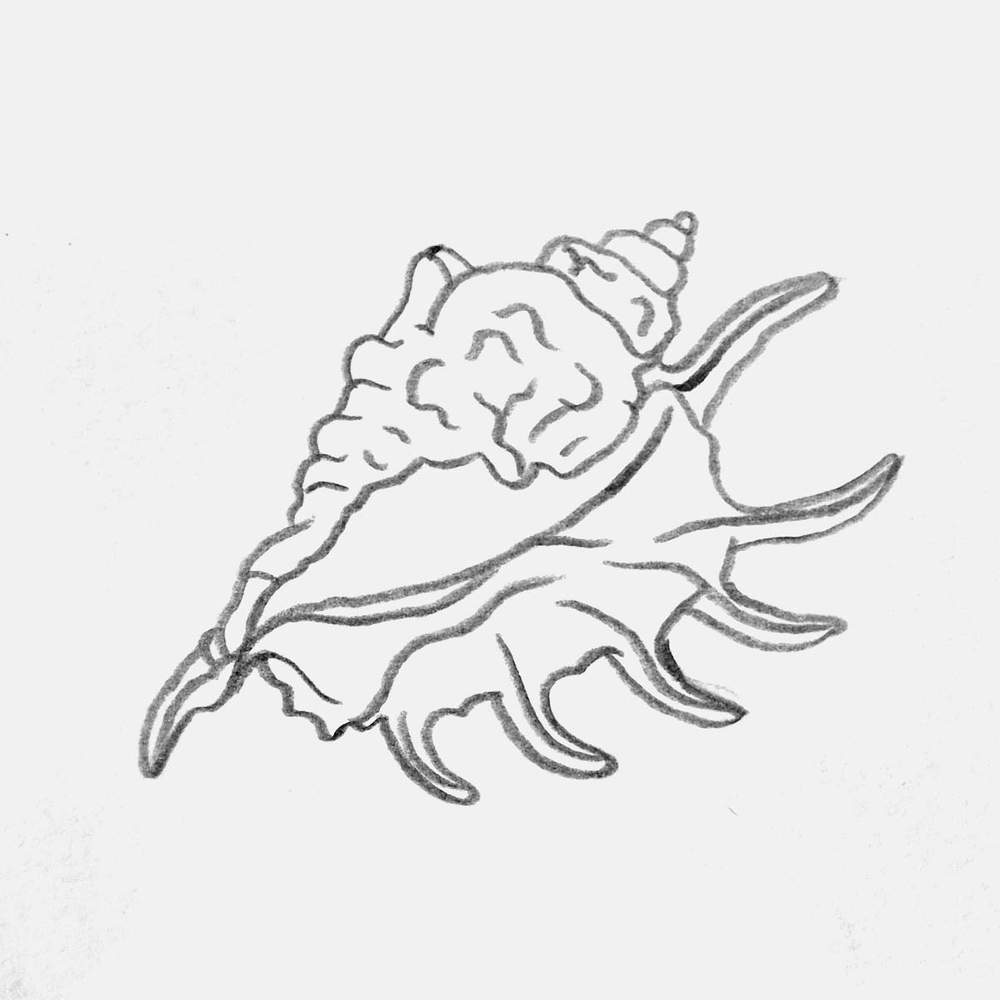
- Size: up to 10 inches
- Commonness: uncommon
- Found in: Indo-Pacific
- Difficulty: hard
If you think the conch wasn't exotic-looking enough? Then this spider conch is the one to draw for you. For the most part, it looks very similar to the regular conch, but this one has unmissable large leg-like shapes attached to the lip. These long projections make this shell stand out everywhere and actually have a function. They stabilize the shell on the sandy ocean floor.
21. Murex Shell
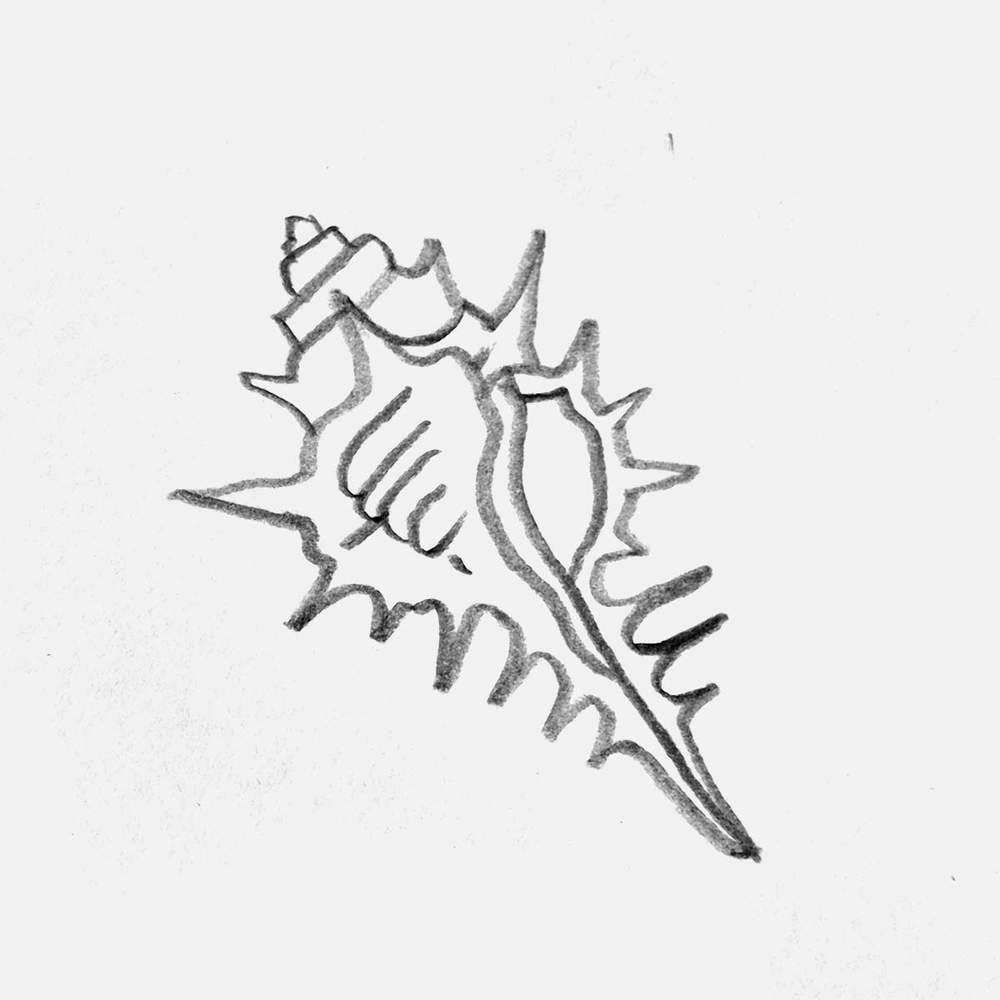
- Size: up to 12 inches
- Commonness: uncommon
- Found in: tropical oceans
- Difficulty: hard
Murex shells are like the goths of the ocean. These shells have large spikes and frills all over them. If you like drawing detailed things, the murex shell is perfect for yoy. It's super rewarding to draw with all the spikey details.
The murex shell is super impressive, but there is a shell that's even more impressive with its shape.
22. Venus Comb Murex Shell
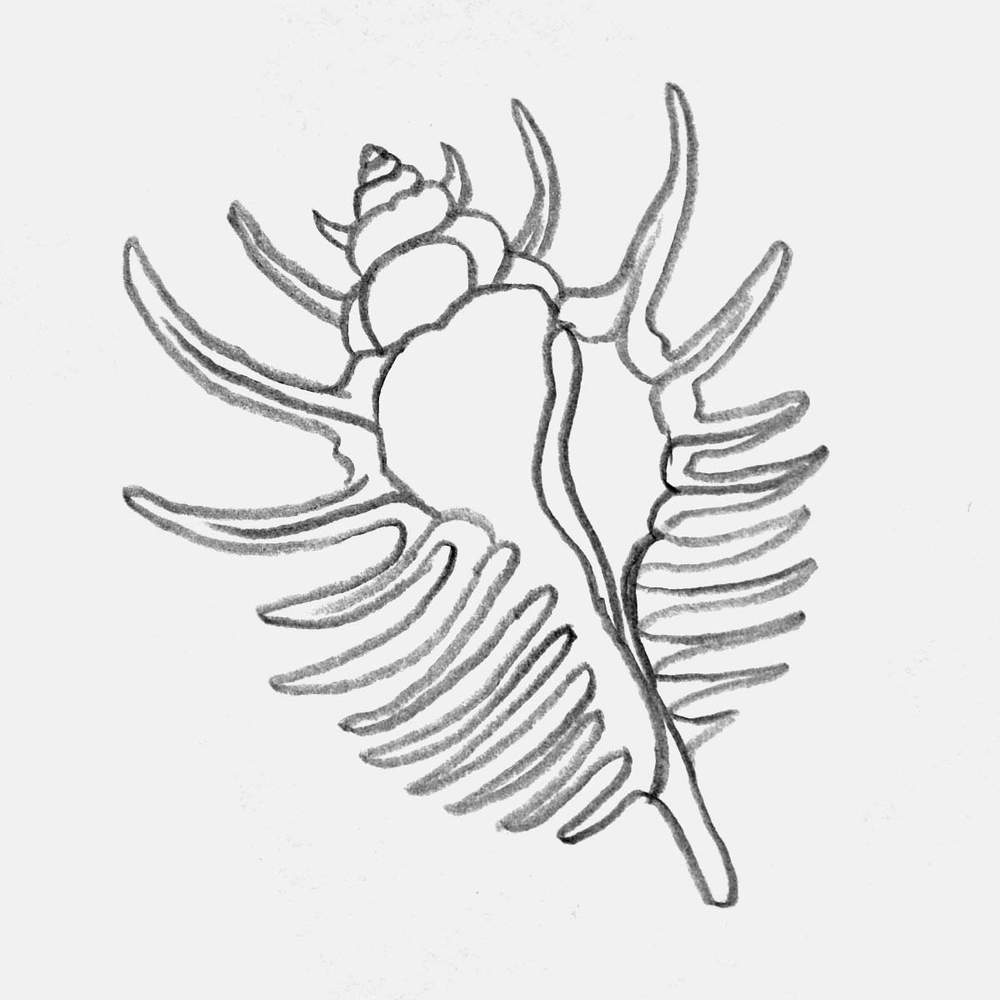
- Size: up to 8 inches
- Commonness: rare
- Found in: Indo-Pacific reefs
- Difficulty: hard
The Venus comb murex shell has the most impressive shape of any shell I could find. It has long spines pointing outwards in all directions, making it look like a comb. Just like the legs of the spider conch, these spines have a function. They protect the snail from predators. And apparently, I'm not the only one who finds the Venus comb murex shells fascinating. These shells are highly sought-after by collectors.
Drawing all these different seashells for this drawing ideas post was the most fun I had in a long time. Trying to replicate the shapes and texture was a rewarding challenge.
I hope these seashells inspired you to get drawing. They definitely inspired me.
Articles You Might Also Like

I love bringing cars to life with alcohol markers and colored pencils.
Whether you're just starting out or looking to improve your skills, I'm here to help!
Click here to learn more about me.


Be the first to comment!
Comments
There are no comments yet.